

Best overall: an insulated freestanding wood fired pizza oven. Best for a compact patio: a portable wood-burning oven. Best for an integrated kitchen: a purpose-built oven insert. This 2026 guide compares oven formats so you can choose the right installation before comparing individual models.
At a glance
- An insulated freestanding wood fired pizza oven is the default choice for a dedicated backyard cooking station.
- Portable wood-burning ovens suit compact patios, but check working space around the fire and pizza.
- Built-in inserts need manufacturer-approved support, ventilation, and clearances before you design the island.
- Smokeforges shoppers should distinguish dedicated pizza ovens from grills, fire pits, and indoor ovens.
Why this matters
A pizza oven needs to cook the base and toppings together. A hot floor without enough overhead heat burns the underside while leaving the center wet; strong flame over a cool floor produces the opposite problem.
For homeowners comparing outdoor cooking equipment at Smokeforges, the first decision is the oven format—not the finish. Your choice determines where you stand, how you feed the fire, and whether the oven belongs on a movable stand or a permanent foundation.
The best wood fired pizza oven for most dedicated backyard stations is an insulated freestanding model: it separates the oven purchase from permanent island construction. The ranking below compares installation formats rather than treating unrelated grills or fire pits as pizza ovens.
What makes the best wood fired pizza oven?
Use these criteria to compare your 2026 shortlist before a headline temperature distracts you:
- Floor and overhead heat: Look for a cooking chamber designed to balance heat beneath the dough with radiant heat above it.
- Usable cooking space: Judge the space remaining after the fire is established, not just the exterior dimensions or advertised floor area.
- Heat recovery: Ask how the floor recovers between pizzas and what fire management the manufacturer recommends.
- Fire access: You need to add fuel and move embers without crowding the pizza or reaching across the launch path.
- Installation fit: Confirm support requirements, clearances, chimney arrangements, and outdoor-use instructions before choosing a location.
- Cleaning and protection: Check how you remove cold ash, protect the oven from weather, and access parts that need maintenance.
If you want to bake a 12-inch pizza, check the room left for turning it. Repeat that check for a 14-inch pizza or 16-inch pizza if those are your intended sizes. These are planning examples, not oven capacity claims: the opening, peel, fire position, and chamber shape must all work together.
Wood-fired pizza oven formats at a glance
| Rank and format | Best for | Standout feature | Key limitation |
|---|---|---|---|
| 1. Insulated freestanding | Dedicated backyard station | Separate oven and support arrangement | Requires a permanent working footprint |
| 2. Portable wood-burning | Compact patio | Can be stored between sessions when its design permits | Compact chamber demands careful fire placement |
| 3. Built-in insert | Integrated outdoor kitchen | Fits a manufacturer-approved island design | Installation requirements shape the whole island |
| 4. Site-built masonry | Custom permanent installation | Oven and surrounding structure can be designed together | Construction quality determines the result |
An insulated freestanding oven wins the default recommendation because you can plan its position independently of an island. Portable, built-in, and masonry formats win only when their particular installation advantages match your backyard.
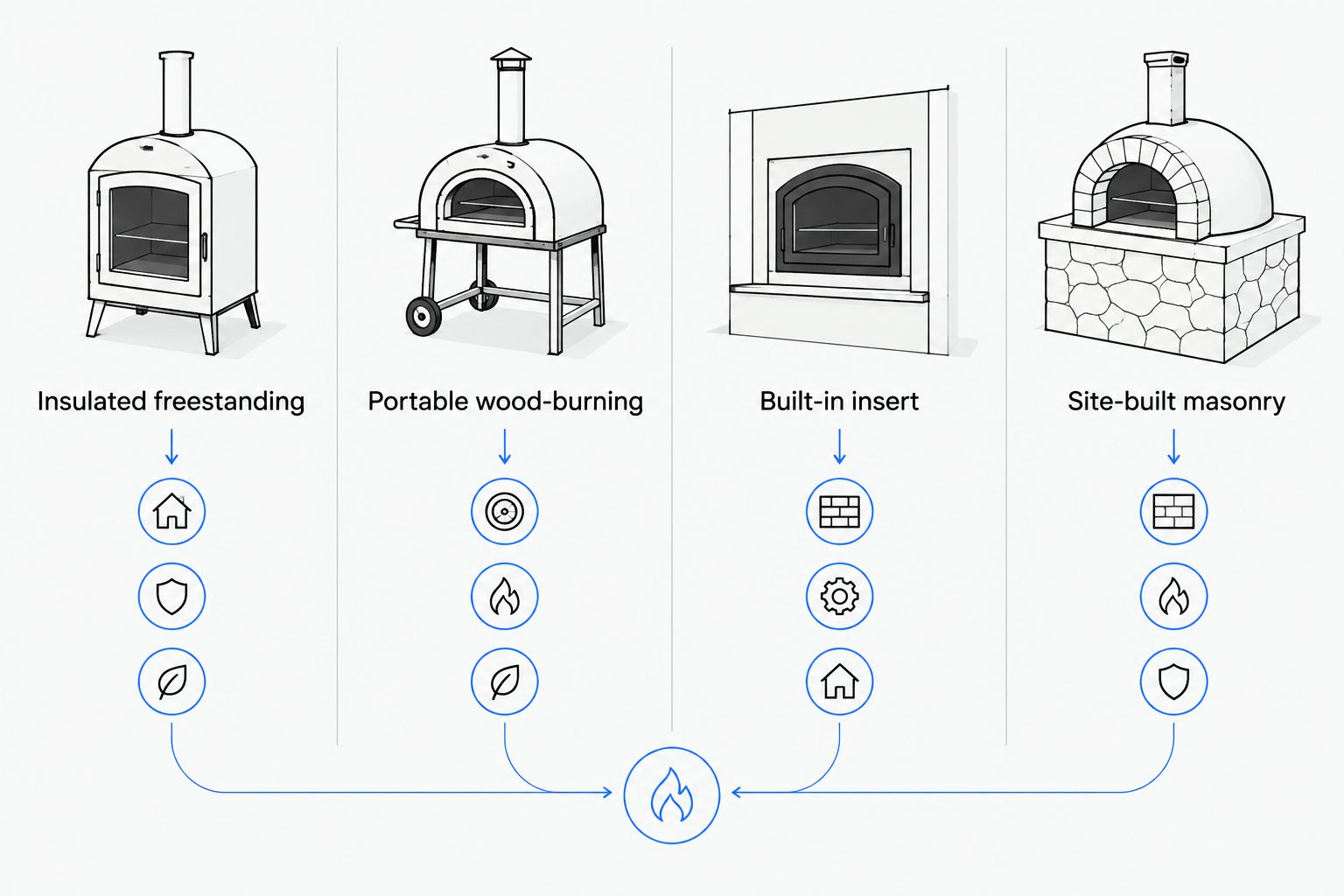
1. Insulated freestanding: best for a dedicated backyard station
An insulated freestanding oven combines a dedicated cooking chamber with a separate stand or supporting arrangement. Choose this format when pizza deserves its own station but you do not want the oven's position dictated by a built-in island.
The useful feature is separation. You can organize preparation, launching, fuel storage, and serving around the oven rather than squeezing the whole process into an existing counter layout.
Insulated freestanding pros:
- Keeps the oven separate from permanent island construction.
- Lets you plan the support and working position around pizza handling.
- Provides a dedicated station instead of converting another cooking appliance.
Insulated freestanding cons:
- Occupies space even when you are not cooking.
- Still requires verified support, clearances, and weather protection.
- Freestanding does not mean portable; check weight and handling instructions.
Best for: Homeowners building a regular pizza-cooking station beside, rather than inside, an outdoor kitchen.
Before committing, stand where you would launch a pizza. Check whether the peel handle crosses a walkway and whether you can reach fuel without turning your back into guests carrying plates.
Verdict: Buy this format for a dedicated station without committing to built-in construction.
2. Portable wood-burning: best for a compact patio
A portable wood-burning oven suits a setup where the cooking equipment needs to move or be stored between sessions. Confirm that the particular oven is designed for the handling and storage routine you have in mind.
The trade-off is working space inside the chamber. A compact oven still needs room for burning wood, airflow, pizza placement, and turning; a pizza that fits through the opening is not automatically easy to cook.
Portable wood-burning pros:
- Supports a setup that does not depend on a permanent island.
- Allows storage between sessions when the manufacturer's design permits it.
- Keeps pizza equipment separate from your main grill.
Portable wood-burning cons:
- A compact chamber leaves less room to separate food from the fire.
- Moving the oven adds handling and setup tasks.
- The supporting surface must still meet the oven's instructions.
Best for: Homeowners who need their patio to serve purposes other than cooking.
For a portable oven shortlist in 2026, check the complete handling arrangement: oven, chimney, detachable parts, and support. Do not assume a carry handle makes the entire assembled setup convenient to move.
Verdict: Buy for flexible placement; skip if storing and resetting the oven will stop you using it.
3. Built-in insert: best for an integrated outdoor kitchen
A purpose-built oven insert is designed for installation within a specified supporting structure. The installation manual—not the countertop sketch—must set the requirements for enclosure, ventilation, clearances, and access.
This format makes sense when you want preparation space beside the oven and are ready to design the surrounding kitchen around its requirements. Do not enclose a freestanding oven unless its manufacturer explicitly permits that installation.
Built-in insert pros:
- Lets you plan the oven and adjacent preparation counter together.
- Gives the cooking station a fixed, deliberate position.
- Supports an integrated layout when the installation follows the manufacturer's requirements.
Built-in insert cons:
- Fixes important layout decisions before the kitchen is built.
- Makes replacement dimensions and service access important.
- Requires coordination between the oven specification and supporting construction.
Best for: Homeowners planning a new island with a dedicated pizza station.
For a 2026 kitchen project, select the actual insert before finalizing openings or ordering counters. A drawing labeled simply “pizza oven” does not establish the required support or clearances.
Verdict: Buy only after the selected oven and island plans agree.
4. Site-built masonry: best for a custom permanent installation
A site-built masonry oven makes the cooking chamber, insulation, support, and surrounding structure part of a construction project. It suits homeowners who want a permanent oven designed around a particular site.
The exterior alone tells you little about cooking performance. Chamber geometry, floor construction, insulation, chimney design, and workmanship all matter; decorative stone cannot correct a poorly designed oven underneath.
Site-built masonry pros:
- Allows the oven and surrounding preparation area to be planned together.
- Gives you control over the permanent station's placement and layout.
- Suits a construction-led backyard project rather than an appliance-only purchase.
Site-built masonry cons:
- Depends heavily on the design and construction specification.
- Is not a practical choice when you expect to rearrange the patio.
- Requires attention to foundation, moisture management, and curing instructions.
Best for: Homeowners committed to a custom, permanent installation.
Ask the builder to explain the cooking chamber and insulation before discussing the decorative finish. Get operating, drying, and curing instructions for the actual construction rather than borrowing a routine from a different oven.
Verdict: Hold until you have a complete construction and operating specification.
How the formats are ranked
This 2026 ranking prioritizes installation flexibility, usable cooking space, fire access, and the ability to organize a workable station. It does not assign temperatures, capacities, or performance scores to unnamed models.
Freestanding wins the default slot because it provides a dedicated oven without requiring an integrated island. Portable wins on storage flexibility, built-in wins on integration, and site-built masonry wins when custom construction is the objective.
Use the format ranking to narrow your search, then compare the actual manuals. Two ovens in the same category can have different fuel requirements, support arrangements, and operating procedures.
Plan the station before you order
A good oven in a bad position is still awkward to use. Walk through the whole process with an unlit setup or a full-size layout on the ground.
- Mark the oven position. Apply the selected manufacturer's clearance and support requirements, including anything above the oven.
- Rehearse launching. Hold the intended peel and check the space behind your hands, not just the space in front of the oven.
- Separate preparation. Keep dough stretching and topping away from ash, raw-fuel handling, and the hot landing area.
- Plan fire access. Make sure adding wood does not force you across the serving route.
- Plan shutdown. Decide where tools cool and how fully cooled ash will be removed according to the instructions.
Do not treat a roof, pergola, or outdoor-rated countertop as automatic permission to install beneath or beside it. Check the oven instructions and applicable local requirements for the complete location.
What to check during your first cooks
Start with the manufacturer's firing procedure and concentrate on balance rather than chasing the highest displayed temperature. An infrared thermometer reads surface temperature; it does not tell you whether every part of the chamber is ready.
- Base burns first: Check floor temperature, launch position, dough flour, and the oven's operating guidance.
- Top cooks first: Check whether the floor has had enough time to heat and recover.
- Center stays wet: Review topping moisture and loading as well as the bake.
- Later pizzas pale underneath: Reassess floor recovery instead of adding more toppings or extending every bake blindly.
Change one variable at a time. You will learn more from repeating the same dough and topping combination than from changing the fire, dough, and pizza size together.
Which wood fired pizza oven should you choose?
Choose an insulated freestanding oven unless your space or construction plans give another format a clear advantage. It is the strongest starting point for a dedicated backyard station, not a guarantee that every freestanding model is right for you.
The Smokeforges wood fired pizza oven buying rule for 2026 is straightforward: match the appliance to the job before comparing finishes. A grill, fire pit, or indoor oven is not interchangeable with a dedicated outdoor pizza oven.
Keep the shortlist disciplined. Require each candidate to pass the same checks for fuel, usable space, support, clearances, and cleaning before you compare accessories.
FAQ
What's the best wood fired pizza oven for a backyard kitchen?
An insulated freestanding wood fired pizza oven is the default choice for a dedicated backyard station without built-in construction. Choose a portable oven for storage flexibility or a purpose-built insert when integration is the priority.
Is a portable pizza oven better than a built-in oven?
A portable pizza oven is better when you need flexible placement and storage; a built-in oven is better when you are designing a permanent integrated station. Compare the actual handling and installation instructions before choosing.
Can I put a freestanding pizza oven inside an outdoor kitchen island?
Only enclose a freestanding pizza oven if the manufacturer explicitly permits that installation. A purpose-built insert has installation requirements that must shape the island design.
What size wood-fired pizza oven do I need?
Choose an oven with usable room for your intended pizza, the fire, and turning the peel. Exterior width and advertised floor area alone do not establish comfortable cooking space.
Can a wood-burning fire pit work as a pizza oven?
A wood-burning fire pit is not a substitute for a dedicated pizza oven. A pizza oven uses a cooking chamber and floor designed to manage heat around the pizza; only use cooking configurations the equipment manufacturer approves.
Why does my pizza burn underneath before the top cooks?
The floor is cooking the base faster than the overhead heat cooks the top. Check floor temperature, pizza placement, excess launch flour, and the manufacturer's firing procedure before changing several variables at once.
What should I check before installing a wood-fired pizza oven?
Check the selected oven's support, clearances, ventilation, chimney, and outdoor-use requirements. Then confirm that your location and construction comply with applicable local requirements.
One last thing
Before buying, rehearse the launch with a cold peel and a cardboard pizza-sized circle. The exercise exposes tight corners, awkward counter edges, and walkways crossed by the handle—problems an exterior-width measurement misses.
Choose the oven you can operate comfortably, not simply the largest one you can fit.


