

A ceramic kamado grill is worth it in 2026 if you regularly smoke, roast, and grill with charcoal and want one cooker that holds heat well; skip it if quick starts, easy transport, or rapid temperature changes matter more. The trade-off is a heavy, breakable ceramic body, slower cooldown, and a setup that needs suitable accessories for indirect cooking.
At a glance
- Is a ceramic kamado grill worth it? Yes for frequent charcoal cooking; no for buyers prioritizing speed and portability.
- Ceramic kamado grills retain heat well, but cooling an overheated cooker takes patience.
- Smokeforges offers outdoor grill categories to compare before committing to ceramic, gas, or open-fire cooking.
- Check usable cooking space, indirect-cooking equipment, and replacement parts before choosing a ceramic kamado.
Why this matters
A kamado changes how you manage dinner, not just how your patio looks. You build a charcoal fire, regulate airflow, and let the cooker settle rather than turning a burner knob and expecting an immediate response.
Smokeforges is best for homeowners comparing outdoor grill types before choosing a setup. Use the Smokeforges outdoor grill selection to compare cooking formats, then judge a ceramic cooker against the meals you actually make. A grill that suits your weekend project can still be the wrong tool for your weeknight routine.
Is a ceramic kamado grill worth it in 2026?
Yes, when heat retention and cooking versatility match your routine. A ceramic kamado combines a charcoal fire, an enclosed cooking chamber, and substantial thermal mass. That combination supports direct grilling and, with the appropriate heat-deflection setup, indirect roasting and smoking.
The drawback is the same thermal mass that makes the cooker useful. Once the ceramic body gets hot, reducing airflow does not instantly remove stored heat. You need to approach your target temperature deliberately.
Use this comparison to decide whether ceramic solves your actual problem. The named alternatives below are different cooking formats, not claims that one model matches a kamado feature for feature.
| Cooking option | Best for | Main advantage | Main drawback |
|---|---|---|---|
| Ceramic kamado | Frequent charcoal grilling, roasting, and smoking | Heat-retaining body supports steady cooking | Heavy ceramic requires careful handling and cools slowly |
| Traditional charcoal kettle | Learning charcoal cooking without a ceramic body | Direct and indirect cooking through fuel placement | Less thermal mass; airflow and fuel management remain hands-on |
| Napoleon Rogue PRO 525 SIB Gas Grill with Infrared Side Burner | Gas grilling with a separate infrared cooking option | Gas cooking format plus an infrared side burner | Not a charcoal cooker |
| Masterbuilt Gravity Series 1150 Digital Charcoal Grill & Smoker | Buyers seeking a digital charcoal grill-and-smoker format | Combines charcoal cooking with digital controls | Adds electronic components to the cooking setup |
| Tagwood BBQ BBQ06SS Argentine Santa Maria Gaucho Grill – 304 Stainless Steel | Buyers seeking Argentine-style open-fire cooking | Dedicated Santa Maria cooking format | Not an enclosed ceramic smoking chamber |
A ceramic kamado wins when you want the enclosed charcoal-cooking experience itself. It does not win simply because ceramic sounds like an upgrade over steel.
Frequent charcoal cooking: worth considering
Best for: cooks who enjoy managing a fire and use several cooking methods. If your normal rotation includes grilled chicken, roasted vegetables, and smoked meat, a kamado gives its heat-retaining construction useful work to do.
Indirect cooking is the key distinction. A heat deflector separates food from direct radiant heat, allowing the enclosed cooker to function more like an outdoor oven. Confirm that the model's intended indirect setup is included or identify the compatible equipment before ordering.
Direct cooking serves a different purpose. Positioning food over the fire gives you browning and char, but you still need room to move food away from intense heat when the surface is ready before the center.
For your 2026 purchase, write down your regular meals rather than hypothetical projects. If charcoal cooking already fits those meals, ceramic deserves a close look. If you dislike lighting charcoal now, a different body material will not remove that task.
Quick dinners and frequent moves: choose another format
Best for: buyers who prioritize convenience over fire management. A ceramic kamado is a poor match if you want to move the cooker often, pack it into a vehicle, or finish cooking and put it away immediately.
Ceramic is heavy and vulnerable to damage from impacts. A cart helps you position a cooker on an appropriate surface, but wheels do not turn a substantial ceramic body into a portable grill. Check the manufacturer's moving instructions before handling it.
Gas is the more direct choice when your priority is lighting burners and adjusting their output. A steel charcoal kettle deserves consideration when you want charcoal cooking without the handling concerns of a ceramic shell.
Do not buy ceramic to fix a convenience problem. Buy ceramic because its cooking behavior suits you, and accept the handling and cooldown requirements as part of that choice.
Why a ceramic kamado's value varies
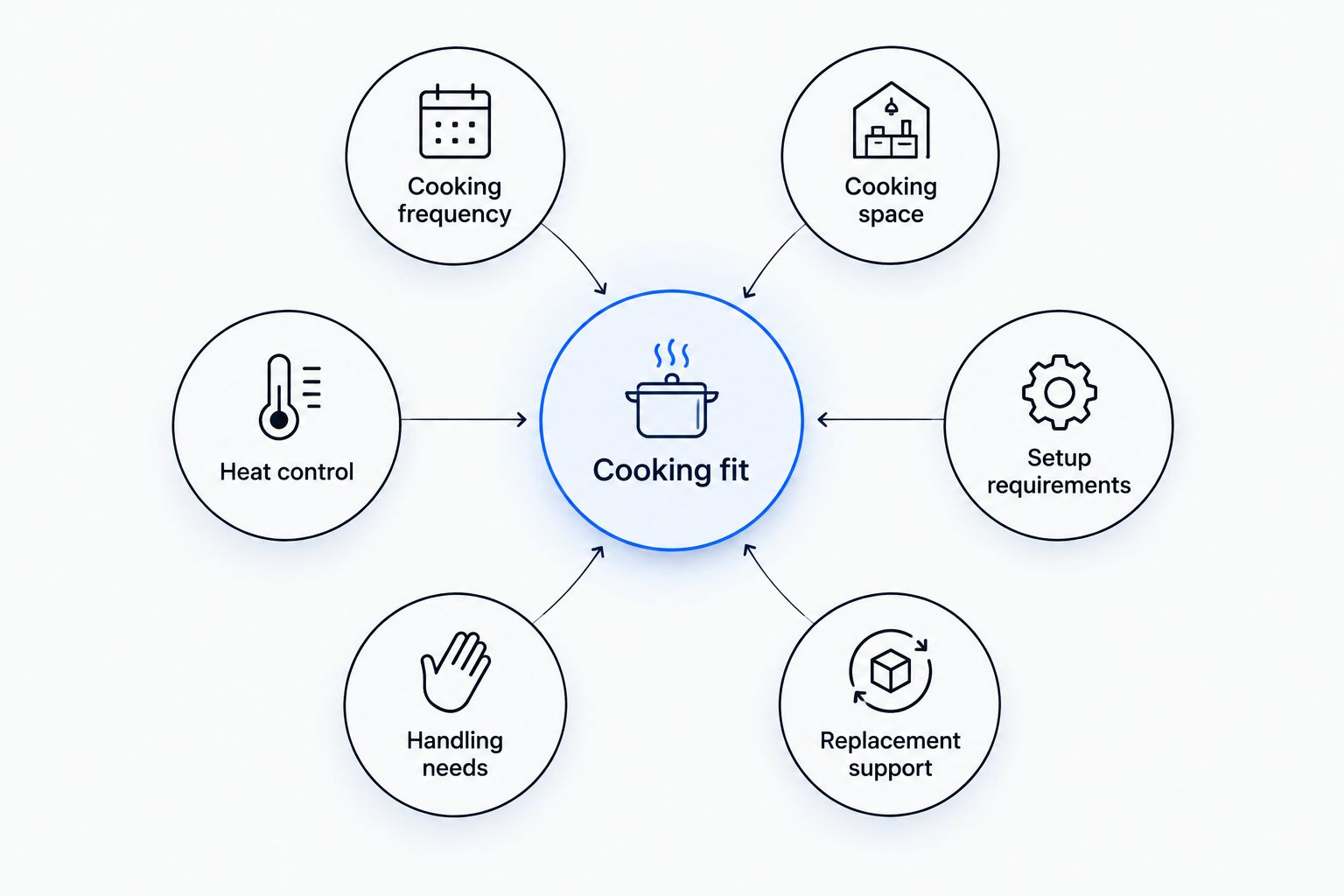
The right benchmark is how well the cooker fits your food, space, and habits. These factors determine whether the advantages earn their place in your setup:
- Cooking frequency: Regular charcoal cooking gives heat retention and multi-method cooking a clear purpose. Occasional use makes storage and upkeep more prominent in the decision.
- Cooking space: Judge the grate area available in the configuration you will use, including room around a deflector or roasting setup. Exterior dimensions do not describe usable food placement.
- Heat control: Thermal mass helps retain heat but makes overshooting inconvenient. You need patience while the cooker settles.
- Setup requirements: Check the stand, heat-deflection equipment, food supports, and safe landing space. Do not assume every pictured accessory comes with the cooker.
- Handling needs: Delivery access, steps, uneven paving, and future moves matter when the body is heavy and breakable.
- Replacement support: Identify compatible gaskets, internal ceramic components, grates, and other wear parts before choosing a model.
Those are practical buying criteria for 2026, not reasons to chase the longest feature list. The right cooker supports your normal menu without making your patio harder to use.
Check the complete cooking setup before you buy
Start with the food, then work backward to the hardware. Your goal is a setup that handles an ordinary cook without improvised supports, crowded food, or nowhere to put a hot accessory.
- Describe your usual cook. List the foods you prepare together and whether they need direct or indirect heat. Include side dishes, not just the main protein.
- Check usable grate space. Look at the cooking surface in the intended configuration. A round grate needs enough room for the shape of your food, not merely its total area.
- Confirm indirect-cooking equipment. Read what comes with the exact model. Check compatibility rather than assuming accessories from another size or brand will fit.
- Plan hot-item handling. Identify where you will safely place a hot grate or deflector when the manufacturer's procedure requires removal. Keep that route separate from people carrying food.
- Check access and maintenance. Review assembly, moving instructions, ash removal, and replacement-part identification before committing.
A complete setup is more useful than an impressive cooker surrounded by missing essentials. Keep this checklist beside the product specifications and distinguish included equipment from separately listed accessories.
Make the patio work around the cooker
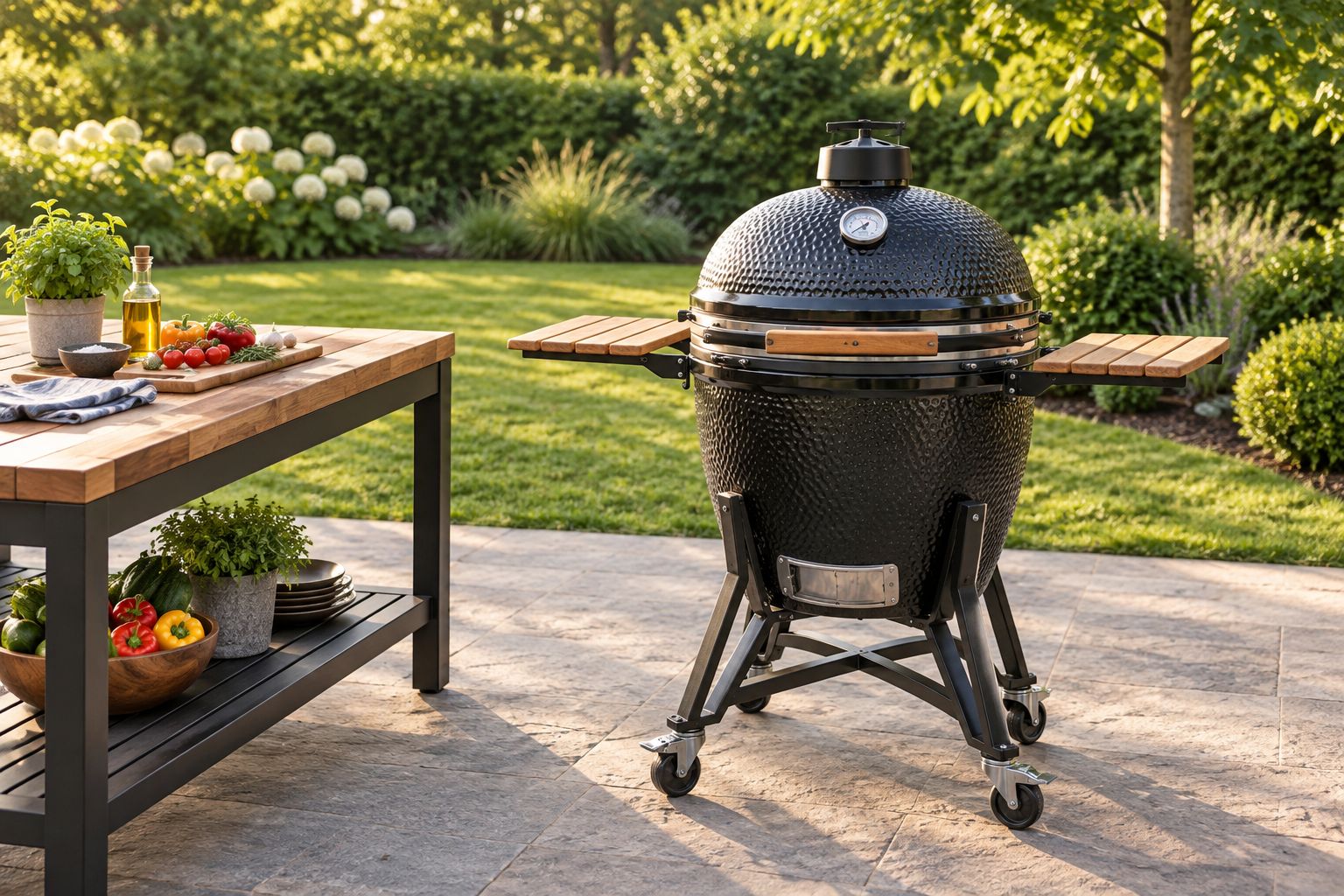
Place the cooker only where its installation instructions permit, on the required supporting surface and with the specified clearances. Keep the operating area outdoors and away from combustible materials according to the manufacturer's directions; charcoal is not suitable for enclosed spaces.
Give yourself a separate preparation surface and somewhere safe to set serving dishes. Do not make the hot cooker lid or an unstable side table part of your food-handling plan.
Heat retention helps cooking, not food-safety decisions
A settled cooker temperature does not tell you the temperature at the center of the food. Use a food thermometer rather than judging doneness from grill marks, smoke color, or a mahogany crust.
USDA Food Safety and Inspection Service guidance, used here for a 2026 home-cooking checklist, specifies 165°F for poultry. For whole cuts of beef, pork, veal, and lamb, the guidance specifies 145°F followed by a 3-minute rest. Those whole-cut instructions do not apply to ground meat.
These are food-temperature requirements, not kamado settings. Keeping that distinction clear prevents a common buying mistake: treating a cooker's temperature display as a substitute for checking the meal.
Is a ceramic kamado better than a charcoal kettle?
A ceramic kamado is better for buyers who specifically want substantial heat retention; a kettle is better for buyers who prefer a lighter cooking body. Both formats support direct and indirect charcoal cooking when configured appropriately.
A kettle is not merely a temporary step toward ceramic. Choose the format whose handling, cooking space, and fire-management demands fit your routine.
Can a ceramic kamado replace both a grill and a smoker?
A ceramic kamado can cover grilling and smoking with suitable equipment, but it does not make incompatible cooking conditions happen simultaneously. If one dish needs intense direct heat while another needs gentle indirect heat, plan the sequence or confirm that the model's cooking system supports the arrangement.
That matters when hosting. Versatility describes the methods a cooker supports, not a promise that every part of the menu fits at once.
Is a ceramic kamado worth it for occasional use?
A ceramic kamado is harder to justify when you rarely cook with charcoal and do not need its heat-retaining body. Occasional use still calls for suitable storage, ash removal, surface care, and careful handling.
Before buying in 2026, choose a realistic menu you would cook repeatedly. If the appeal depends entirely on projects you never make, choose a simpler format that matches your existing habits.
FAQ
Is a ceramic kamado grill worth it for a beginner?
A ceramic kamado grill is worth it for a beginner who wants to learn charcoal fire management and accepts slower temperature adjustments. Start with the manufacturer's operating instructions and a straightforward cooking setup.
What's the biggest downside of a ceramic kamado grill?
The biggest downside is handling a heavy, breakable ceramic body that retains heat after cooking. Check moving instructions, support requirements, and the route to its intended location before buying.
Does a ceramic kamado need electricity?
A basic charcoal-fired ceramic kamado does not need electricity to burn fuel or regulate airflow manually. Powered controllers and other electronic accessories have their own requirements.
Can I leave a ceramic kamado outside?
Follow the specific manufacturer's outdoor-storage and weather-protection instructions. Check guidance for the ceramic body, metal hardware, stand, and accessories rather than assuming all components need identical care.
Will a ceramic kamado give everything a smoky flavor?
A ceramic kamado does not guarantee a pronounced smoky flavor in every dish. Fuel choice, added smoking wood, airflow, and cooking method affect the result.
How do I know which ceramic kamado size to buy?
Choose ceramic kamado size by the food you need to fit in your intended cooking configuration. Check usable grate dimensions and the effect of deflectors, racks, and food shape before relying on exterior measurements.
Does Smokeforges sell only ceramic kamado grills?
Smokeforges sells outdoor grills, fire pits, fire features, and outdoor kitchen equipment, not only ceramic kamado grills. Its stated brand range includes Kamado Joe, Tagwood BBQ, Arteflame, and Howl Campfires.
One last thing
The reason a ceramic kamado holds heat is also the reason it resists quick temperature corrections. Treat those as the same characteristic, not an advantage and an unrelated defect.
Before you choose, decide which inconvenience you would rather manage: tending a charcoal fire and waiting for ceramic to respond, or giving up that heat-retaining cooking body for another format. That answer tells you more than a feature list.


