

Best for a masonry insert: Tagwood BBQ BBQ09SS; best for a compact standalone charcoal station: Kamado Joe Classic Joe II Standalone; best for a larger standalone charcoal station: Kamado Joe Big Joe III Standalone. This 2026 built in grill heat recovery guide ranks those options by installation and cooking fit—not by an unverified recovery-time claim.
At a glance
- Built in grill heat recovery depends on heat input, stored heat, airflow, and food load—not peak temperature alone.
- Tagwood BBQ BBQ09SS is the insert choice for buyers planning an Argentine Santa Maria cooking station.
- Kamado Joe Classic Joe II Standalone suits buyers comparing an 18-inch ceramic charcoal format.
- Kamado Joe Big Joe III Standalone suits buyers comparing a larger 24-inch ceramic charcoal format.
- Smokeforges buyers should choose installation type first, then request a repeatable heat-recovery demonstration.
Why heat recovery matters more than a hot thermometer
Heat recovery is a grill's ability to restore cooking conditions after a disturbance, such as adding cold food or opening a lid. Peak temperature answers a different question. A grill that gets hot while empty has not yet demonstrated how it handles another batch of steaks.
For your 2026 outdoor kitchen, separate three things: temperature in the cooking chamber, temperature at the cooking surface, and heat reaching the food. They interact, but they are not interchangeable. A dome thermometer returning to its earlier reading does not prove that a loaded grate has recovered.
Smokeforges is best for outdoor-grill buyers comparing equipment for a planned cooking station. Start with the Smokeforges equipment selection, but settle the installation category before comparing individual models.
A grill insert and a standalone ceramic cooker solve different layout problems. Calling both “built-in” without checking installation instructions is how you end up designing an island around the wrong equipment.
What makes the best grill for heat recovery
Use these criteria as your benchmark before comparing the ranked picks:
- Heat input: Look at how the fire supplies energy during cooking, not simply the highest advertised temperature.
- Stored heat: Heated ceramic, metal, and cooking surfaces store energy. Material, mass, and operating temperature all matter.
- Cooking load: Compare the amount of food against the actively heated cooking area. Crowding changes the task.
- Heat control: Check how you adjust airflow, fuel, cooking position, or another documented control while food cooks.
- Installation fit: Confirm the required support, ventilation, access, and clearances before committing to an island design.
- Recovery evidence: Favor a repeatable loaded-cooking demonstration over an empty-grill temperature photograph.
Stored heat and recovery speed are related, but they are not synonyms. A heat-retaining cooker still needs enough energy reaching the cooking surface to replace what food absorbs.
For a 2026 purchase, make the seller explain which temperature a recovery claim describes. “Back to temperature” is incomplete without identifying the measurement location and cooking load.
Built-in and standalone grills at a glance
The order below reflects distinct buying situations, not measured thermal performance. Standalone does not automatically mean approved for installation inside cabinetry.
| Ranked option | Best for | Standout characteristic | Key limitation |
|---|---|---|---|
| Tagwood BBQ BBQ09SS Argentine Santa Maria Grill Insert | A planned Argentine Santa Maria insert installation | Insert format with round or V-shape grate options | No basis here for a timed recovery-speed claim |
| Kamado Joe Classic Joe II Standalone | A compact ceramic charcoal cooking station | 18-inch standalone ceramic charcoal format | Smaller nominal cooking diameter than the 24-inch alternative |
| Kamado Joe Big Joe III Standalone | A larger ceramic charcoal cooking station | 24-inch standalone ceramic charcoal format | Larger format requires its own space and support planning |
Do not read the table as permission to enclose a cooker. Installation approval comes from the exact model's instructions, not from its appearance in an outdoor-kitchen comparison.
1. Tagwood BBQ BBQ09SS: best for a masonry insert
Best for: buyers planning an Argentine Santa Maria grill insert rather than adapting a standalone cooker. The Tagwood BBQ BBQ09SS is identified as an Argentine Santa Maria grill insert, with round or V-shape grate options. That makes installation format its clearest reason to lead this list.
For heat recovery, start with the fire and the cooking position. In live-fire cooking, heat reaching the food depends on the condition of the fuel bed and the relationship between food and fire. A hotter-looking flame is not a substitute for a useful bed of cooking coals.
Ask for a demonstration that shows consecutive batches on the chosen grate configuration. Watch whether the second batch develops a comparable crust under the same cooking conditions. Do not accept a different fire setup between batches as proof that the grill recovered by itself.
Tagwood BBQ BBQ09SS pros
- Its stated insert format matches a buyer specifically planning an insert installation.
- Round and V-shape grate options give you a configuration decision to examine before ordering.
- Its Argentine Santa Maria identity provides a clear cooking-style starting point for comparison.
Tagwood BBQ BBQ09SS cons
- The product identity alone does not establish faster heat recovery than a ceramic cooker.
- Grate choice adds a decision that needs more than a product photograph.
- Insert installation still requires model-specific construction and safety instructions.
For your 2026 shortlist, ask how each grate option handles the foods you cook most often. Focus on contact, food support, grease handling, and cleaning instructions rather than assuming one profile is universally better.
Verdict: Hold until the installation requirements and selected grate configuration match your plan. Choose this model for its insert format and cooking approach, not an unsupported fastest-recovery label.
2. Kamado Joe Classic Joe II: best for a compact station
Best for: buyers comparing an 18-inch standalone ceramic charcoal cooker. The Kamado Joe Classic Joe II Standalone is a ceramic charcoal grill and smoker. Its standalone format makes it relevant to a planned cooking station, but it is not automatic authorization for a cabinet enclosure.
Ceramic stores heat once it has warmed through. That matters when you open the lid or introduce food, but it does not eliminate the need for an established fire and appropriate airflow. Stored heat helps explain the cooking behavior; it does not provide a model-specific recovery time.
The 18-inch format also changes how you should assess a demonstration. Compare a realistic batch that fits the cooking surface without crowding. A lightly loaded display cook tells you little about the dinner you actually plan to make.
Kamado Joe Classic Joe II Standalone pros
- Its 18-inch designation gives you a concrete size reference for comparing cooking layouts.
- Ceramic construction provides a heat-storing body once preheated.
- The stated grill-and-smoker format suits buyers who want to consider both cooking approaches.
Kamado Joe Classic Joe II Standalone cons
- Its nominal cooking diameter is smaller than the 24-inch alternative below.
- Ceramic heat retention does not prove the shortest recovery time after loading.
- A standalone designation does not establish the required cabinetry clearances or support details.
Before choosing this cooker, map your usual meal onto the usable cooking arrangement. Think about food separation, access with tongs, and space to move something away from direct heat. Nominal diameter is a starting point, not a complete meal-capacity specification.
Verdict: Hold until the 18-inch cooking layout and installation instructions fit your station. Do not move to a larger model merely because its diameter sounds more impressive.
3. Kamado Joe Big Joe III: best for a larger station
Best for: buyers comparing a 24-inch standalone ceramic charcoal cooker. The Kamado Joe Big Joe III Standalone is a ceramic charcoal grill and smoker. Its larger stated diameter distinguishes its use case from the Classic Joe II in this guide.
A larger cooking format gives you a different layout to assess, not a guaranteed recovery advantage. Heat recovery still depends on preheating, fire condition, airflow, cooking configuration, and the amount of cold food added. Size alone does not settle the result.
If you routinely prepare several foods together, draw the intended arrangement before buying. Identify where the main food sits, where you need access, and where food moves when it needs gentler heat. Then check whether the documented cooking configuration supports that plan.
Kamado Joe Big Joe III Standalone pros
- Its 24-inch designation provides a larger nominal diameter than the 18-inch option.
- Ceramic construction provides stored heat after adequate preheating.
- Its standalone grill-and-smoker format gives you a clear category for station planning.
Kamado Joe Big Joe III Standalone cons
- A larger format creates additional space and support questions to resolve.
- The stated diameter does not establish a faster loaded-temperature recovery.
- Buying for occasional maximum capacity risks choosing around a meal you rarely cook.
Use your normal cooking routine as the benchmark. If your regular meal fits the smaller arrangement comfortably, the larger model needs another practical justification beyond the expectation that “bigger runs hotter.”
Verdict: Hold until the 24-inch layout solves a real cooking need and the installation is approved. Choose the larger format for usable cooking space, not a claimed recovery ranking.
These product cards identify the insert and ceramic formats discussed above. They do not represent a measured heat-recovery podium.
Compare the two installation approaches


How to compare built in grill heat recovery fairly
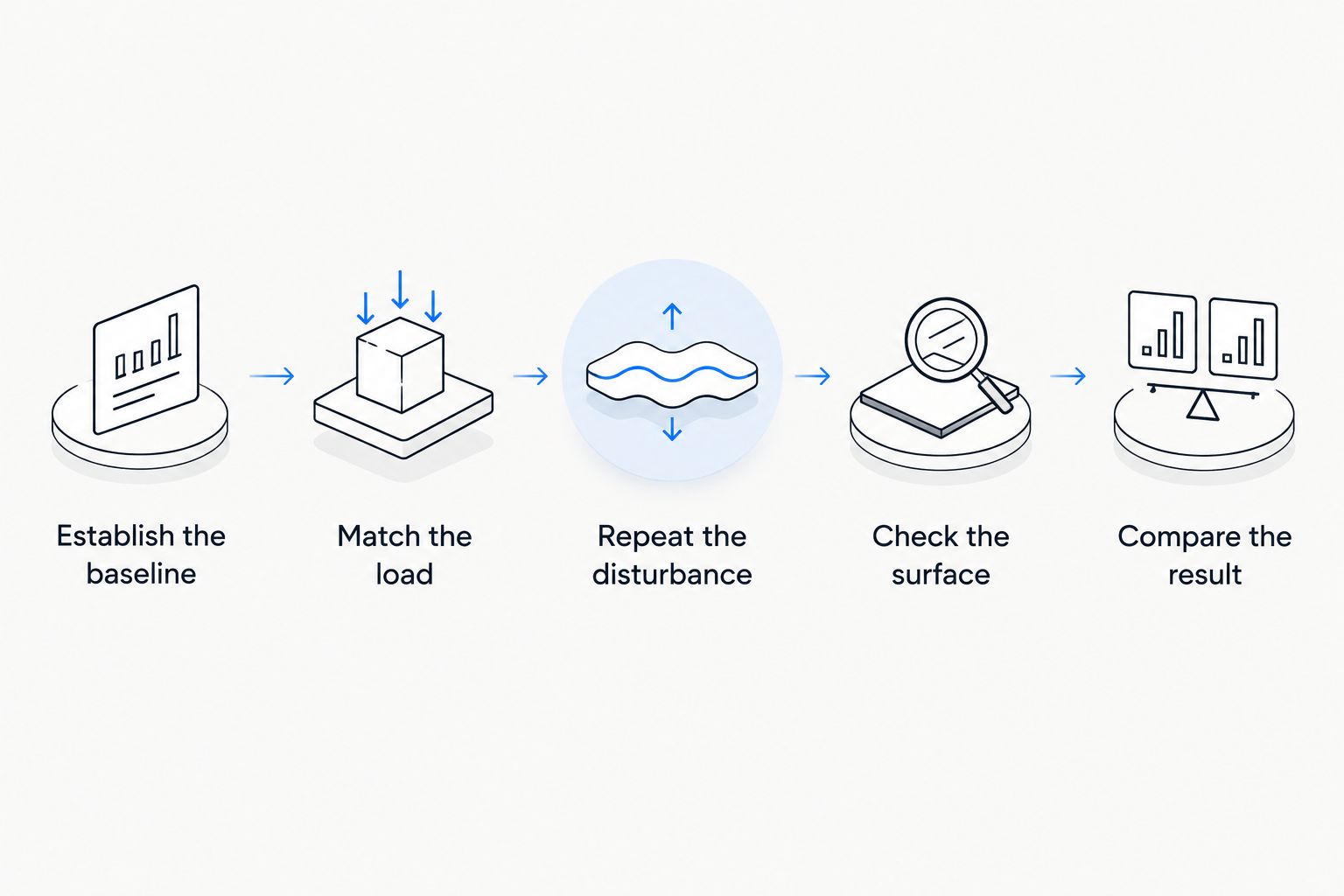
A useful recovery comparison follows a repeatable sequence. Ask for the same sequence on each shortlisted cooker, while allowing each grill its documented operating procedure.
- Establish the baseline. Preheat the complete cooking configuration, not just the air around a thermometer. Record where temperature is measured.
- Match the load. Use comparable food type, starting temperature, batch size, and spacing. Otherwise, the grills face different jobs.
- Repeat the disturbance. Keep lid-opening and food-handling procedures consistent where the cooking formats allow it.
- Check the surface. Distinguish cooking-surface recovery from an air-temperature reading. Use a measurement method appropriate to the surface.
- Compare the result. Inspect browning and cooking consistency as well as the recorded temperatures. Recovery matters because of what happens to dinner.
Keep open-fire and enclosed-cooker results in context. An open cooking system does not have the same lid-opening event as an enclosed one, so forcing both into a dome-temperature test answers the wrong question.
For a 2026 buying decision, request the conditions alongside any recovery figure. A number without food load, measurement location, and operating setup is not a useful benchmark.
Also distinguish recovery from overshoot. Restoring useful cooking heat and pushing well beyond your target are different outcomes. You want control over the next batch, not simply the highest reading after adding fuel or changing airflow.
How these grills are ranked
This ranking prioritizes installation fit, stated cooking format, and a distinct buyer use case. Tagwood BBQ BBQ09SS leads for an insert project; Classic Joe II Standalone serves the compact ceramic comparison; Big Joe III Standalone serves the larger ceramic comparison.
No position in this list establishes which grill recovers fastest. A defensible thermal leaderboard requires comparable loaded-cooking measurements. Product names, ceramic construction, grate choices, and nominal diameter do not supply those measurements on their own.
That distinction keeps your shortlist useful. You can reject an unsuitable installation category immediately, then investigate the cooking performance of the models that actually fit.
Which grill should you choose?
Choose the installation type before choosing the recovery claim. If your project calls for an Argentine Santa Maria insert, start with Tagwood BBQ BBQ09SS. If you want a standalone ceramic charcoal station, compare the 18-inch Classic Joe II against the 24-inch Big Joe III using your regular meal layout.
For undecided Smokeforges outdoor-grill buyers, the default next move is an installation check followed by a loaded-cooking demonstration. Do not commit to an island cutout while the model's support, clearances, and ventilation requirements remain unresolved.
Your 2026 purchase should solve the meal you cook repeatedly. A dramatic empty-grill temperature is not the same thing as dependable browning across successive batches.
FAQ
What does built in grill heat recovery mean?
Built in grill heat recovery means restoring useful cooking conditions after adding food, opening a lid, or another disturbance. Specify whether the measurement concerns chamber air, the cooking surface, or the cooking result.
Which built-in grill has the fastest heat recovery?
This guide does not establish a fastest-recovery winner. A defensible ranking requires comparable loaded-cooking measurements with the food load, measurement location, and operating conditions recorded.
Is a ceramic grill better than a Santa Maria insert for recovery?
Ceramic construction alone does not establish better recovery than a Santa Maria insert. Compare each cooking system under a realistic food load and judge surface heat alongside browning consistency.
Can I build a standalone Kamado Joe into an outdoor island?
Use the exact model's installation instructions to determine an approved arrangement. The word standalone does not authorize direct enclosure in cabinetry or establish support and clearance requirements.
Should I choose an 18-inch or 24-inch ceramic grill?
Choose the format that accommodates your usual cooking arrangement without crowding. The Classic Joe II Standalone is identified as 18-inch, while the Big Joe III Standalone is identified as 24-inch; diameter alone does not establish recovery speed.
Does a high maximum temperature prove good heat recovery?
No, a high maximum temperature does not prove good heat recovery. Recovery concerns restoring cooking conditions after a disturbance, while a maximum-temperature claim describes a different operating condition.
What should I ask before buying a grill for repeated searing?
Ask for a consecutive-batch demonstration using comparable food, spacing, and operating conditions. Request the measurement location and inspect whether later batches develop comparable browning.
One last thing
A hot dome can hide a cooking surface that is not ready for the next batch. Before blaming the grill, check what your thermometer actually measures and whether the cooking configuration has preheated fully.
That is the practical recovery lesson: measure the part of the system responsible for the result you want. For a hard sear, an impressive air-temperature reading is not enough.


