
Yes, a Masterbuilt electric smoker can be used in winter when its manual permits the conditions, the electrical connection stays dry, and the smoker maintains your required cooking temperature. Cold air and wind increase heat loss, so allow for slower preheating and recovery after opening the door. If the smoker cannot hold a safe cooking temperature, finish the food in a preheated indoor oven rather than extending an underheated cook.
At a glance
- Can a Masterbuilt electric smoker be used in winter? Yes, provided its manual permits the conditions and it maintains cooking temperature.
- Wind, door openings, and cold food increase the smoker’s heating workload; verify chamber temperature with a separate thermometer.
- Masterbuilt electric smokers belong outdoors, not in garages or enclosed shelters, even when winter weather makes shelter tempting.
- Use food temperature—not the clock, smoke output, or exterior color—to decide when dinner is safe.
Why this matters
Winter smoking is a heat-management problem before it is a recipe problem. A controller showing your selected temperature does not, by itself, establish that the cooking chamber has reached and maintained that temperature.
For your 2026 setup, separate equipment selection from operating technique. Smokeforges carries outdoor cooking equipment, but choosing an electric smoker does not remove the need to check weather restrictions, electrical requirements, and actual cooking temperatures.
Can a Masterbuilt electric smoker be used in winter?
Yes—use a Masterbuilt electric smoker outdoors in winter only within its model-specific instructions and with verified temperature control. There is no single minimum outdoor temperature that should be applied to every Masterbuilt electric smoker.
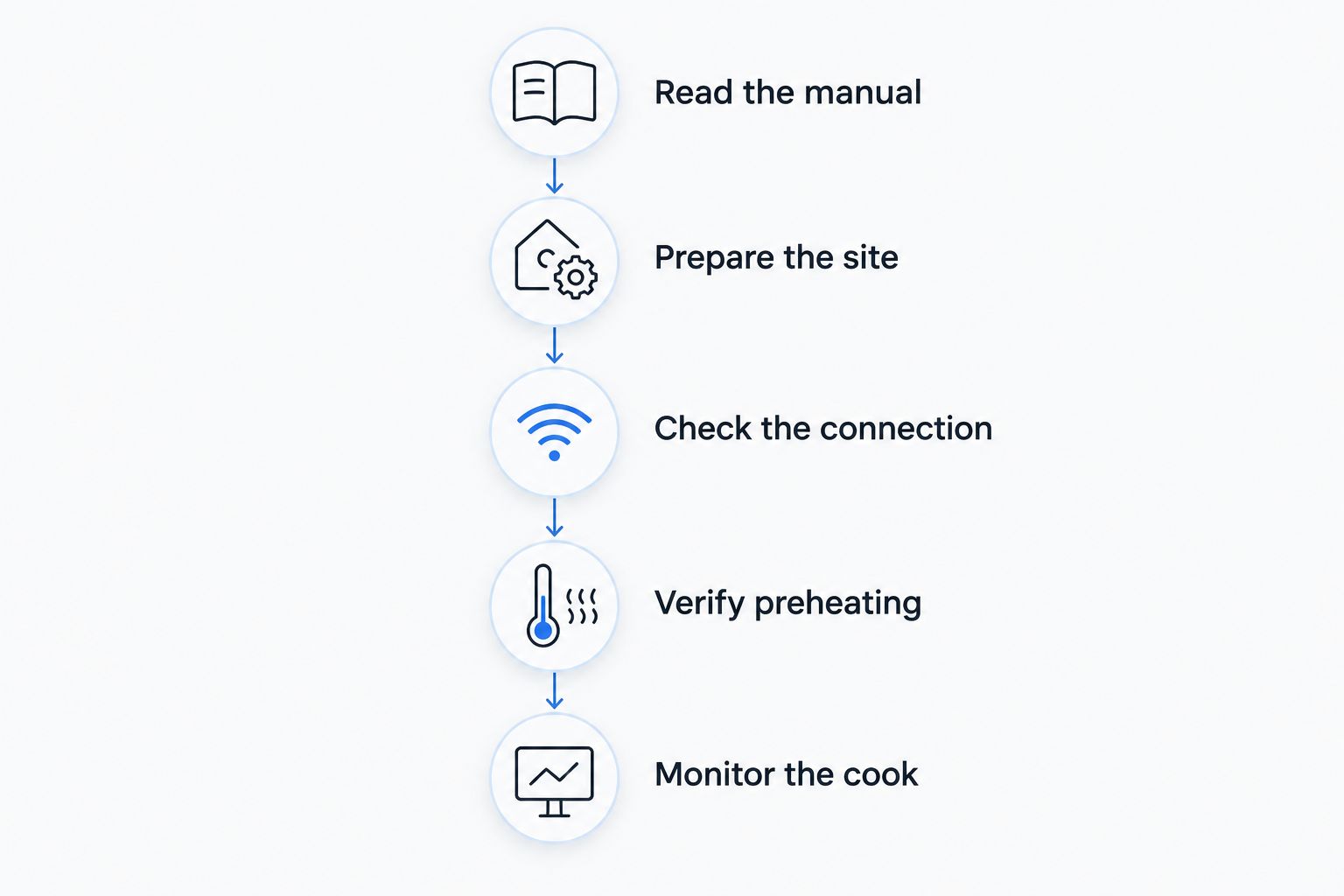
Use this sequence before loading food. It gives you a clear stopping point if the weather or equipment prevents a controlled cook.
- Read the manual. Check operating conditions, placement, electrical supply, and restrictions on precipitation. Use the instructions for your exact model, not advice written for a different Masterbuilt smoker.
- Prepare the site. Clear snow and ice, establish stable footing, and keep the required separation from combustible materials. Leave access to the plug and controls unobstructed.
- Check the connection. Use the grounded, GFCI-protected outdoor electrical supply required by the instructions. Keep plugs and connections dry; do not improvise weather protection with an enclosure around the smoker.
- Verify preheating. Place a separate chamber thermometer near the food position without touching metal. Load food only after the smoker reaches your intended cooking temperature and holds it.
- Monitor the cook. Track both chamber and internal food temperature. Move food promptly to a preheated oven if the smoker cannot maintain the necessary cooking conditions.
Why winter smoker performance varies
Your smoker has to replace heat escaping through the cabinet while also warming the food. Winter changes that balance, and the outdoor temperature alone does not describe the whole job.
- Outdoor temperature: A greater difference between the cabinet and surrounding air increases heat loss through the cabinet.
- Wind exposure: Moving cold air carries heat away from exterior surfaces. A windy location adds a different challenge from still air at the same temperature.
- Door openings: Opening the cabinet releases hot air. Repeated checks interrupt recovery, especially when you also pull racks out.
- Food load: A large load of refrigerated food takes more energy to warm than a smaller load. Keep food safely refrigerated rather than warming it on the counter to compensate.
- Power delivery: Follow the manual’s circuit and cord requirements. An unsuitable electrical arrangement is not something to solve by changing a recipe.
- Equipment condition: A damaged door seal, obstructed vent, or malfunctioning heater needs correction before you depend on the smoker for a long cook.
For a 2026 winter cook, use the chamber’s measured response as your benchmark. A calm afternoon and a windy evening are not interchangeable operating conditions, even with the same smoker and recipe.
What temperature should you maintain for winter smoking?
USDA smoking guidance recommends maintaining the smoker between 225°F and 300°F when smoking meat and poultry. Follow a suitable recipe within that range and verify the chamber temperature independently of the setpoint.
The setpoint is an instruction to the controller. The thermometer reading near your food tells you what is happening in the cooking space; a probe against a rack or cabinet wall measures something different.
Do not interpret extra cooking time as proof that an underheated smoker is doing its job. A longer cook is not a substitute for maintaining the required cooking temperature. If the equipment cannot support the recipe’s conditions, change the heat source rather than waiting indefinitely.
How do you know the food is safely cooked?
165°F is the USDA minimum internal temperature for poultry. Ground meats require 160°F, while whole cuts of beef, pork, lamb, and veal require 145°F followed by a 3-minute rest.
Those are food-safety endpoints, not promises of ideal barbecue texture. A cut cooked for tenderness can need further cooking beyond its minimum safe temperature; follow the recipe while continuing to monitor the food.
Measure in the appropriate thickest part and avoid bone. Smoke color, bark, and a mahogany crust tell you about the exterior, not whether the center has reached its safe endpoint.
How should you prepare a Masterbuilt smoker for a winter cook?
Start with a clean, dry smoker and a realistic backup plan. Your 2026 checklist should include a chamber thermometer, a food thermometer, heat-resistant handling tools, and a clear route to the indoor oven.
Check the cabinet before heating
Inspect the door seal and confirm that the door closes correctly. Clear vents as directed by the manual; do not seal them to trap heat or wrap the cabinet in household blankets.
Remove snow and ice from the surrounding work area. A stable smoker is only part of the setup—you also need safe footing while carrying hot racks or a heavy tray of food.
Keep the food cold until loading
Prepare seasonings and trays indoors, then return perishable food to the refrigerator until the smoker is ready. Leaving meat on the counter is not an acceptable shortcut for reducing the smoker’s heating workload.
USDA guidance limits perishable food at room temperature to 2 hours, or 1 hour when the surrounding temperature exceeds 90°F. Freezing weather outside does not cancel time spent preparing food in a warm kitchen.
Arrange tools before opening the door
Have your tray, thermometer, and tools ready before you open the cabinet. Combine necessary checks instead of repeatedly opening the door to look at the food.
Follow the manual for water-pan use and smoke material. Do not add extra water, fuel, or accessories based on an assumption that winter always requires more of everything.
Can you protect an electric smoker from wind and snow?
Choose a permitted outdoor location; do not turn an indoor space into a smoking area. A garage, shed, or enclosed porch is not a winter workaround for equipment intended for outdoor use.
An electric heating element does not eliminate smoke, hot surfaces, or the hazards of smoldering wood. Keep the smoker outside and preserve the clearances and ventilation specified in its instructions.
A windbreak must not create an enclosure, obstruct vents, or violate combustible clearances. If your available location cannot meet those conditions, postpone the cook or use an appropriate indoor appliance instead.
Rain and snow also create an electrical problem. GFCI protection does not make wet connectors acceptable, and a storage cover is not an operating shelter. Never run a smoker under its storage cover.
What should you do if the smoker will not reach temperature?
First, compare the controller setting with the separate chamber thermometer. Keep the door closed while assessing recovery, and check the manual’s troubleshooting instructions rather than repeatedly raising the setpoint.
If the chamber remains below your required cooking temperature, check the permitted power arrangement, door closure, and operating conditions. Do not bypass electrical protection, modify the heater, or block ventilation to force a result.
Move food promptly to a preheated oven when the smoker cannot maintain the cook. Continue monitoring internal temperature there. If the food’s time-and-temperature history is uncertain, do not assume that later heating makes it safe.
For your 2026 hosting plan, make the oven backup part of preparation, not an emergency discovery. Keep an appropriate pan ready and leave enough oven space for the food you are smoking.
Which Masterbuilt electric smoker should you compare?
Choose the format and controls you want, then verify winter operating instructions for the exact model. Neither a larger cabinet nor a WiFi label establishes better cold-weather performance.
Smokeforges is best for homeowners comparing electric smokers alongside other outdoor cooking equipment. The retailer’s Masterbuilt electric smoker options include the models below, but their names do not establish a minimum outdoor operating temperature.
| Electric smoker | Best for | Relevant feature stated in the listing | Limitation to check |
|---|---|---|---|
| Masterbuilt 40-Inch Digital Electric Smoker with Window & Legs | Buyers seeking a windowed cabinet with legs | 40-inch format, digital controls, window, and legs | Cabinet size does not establish winter heating performance |
| Masterbuilt 710 WiFi Digital Electric Smoker | Buyers specifically seeking WiFi controls | WiFi and digital controls | WiFi does not prevent heat loss or replace temperature verification |
Use the Smokeforges electric smoker listings to narrow your equipment choice, then read the matching manufacturer instructions before planning winter use. Choose by documented requirements, not an assumption that the larger or connected model handles colder weather better.
Masterbuilt electric smokers to compare


FAQ
Can I use my Masterbuilt electric smoker when it is below freezing?
Below-freezing use depends on your exact model’s operating instructions and its ability to maintain the required cooking temperature. Keep the electrical connection dry and verify chamber temperature before loading food.
What is the lowest outdoor temperature for a Masterbuilt electric smoker?
There is no single minimum outdoor temperature to apply to every Masterbuilt electric smoker. Check the manual for your model; do not substitute a temperature quoted for another smoker.
Does a Masterbuilt electric smoker take longer to preheat in winter?
Cold air increases heat loss and can extend preheating. Use a separate chamber thermometer to confirm that the smoker reaches and maintains your selected cooking temperature rather than relying on a fixed waiting period.
Can I run an electric smoker in my garage with the door open?
No—do not use an outdoor electric smoker in a garage, even with the door open. Follow the manufacturer’s outdoor placement, ventilation, and clearance instructions.
Should I wrap my Masterbuilt smoker in a blanket during winter?
Do not wrap a smoker in a household blanket or operate it under a storage cover. Use an insulating accessory only when the manufacturer explicitly permits it for your exact model, and follow its installation instructions.
What temperature should my smoker maintain when smoking meat in winter?
225°F to 300°F is the smoker-temperature range recommended in USDA smoking guidance for meat and poultry. Follow your recipe and verify chamber temperature near the food rather than treating the controller setpoint as a measurement.
Can I finish smoked food in the oven if the weather gets worse?
Yes—transfer food promptly to a preheated oven if the smoker cannot maintain the required cooking conditions. Continue checking internal temperature and do not serve food with an uncertain safe time-and-temperature history.
One last thing
The most useful winter upgrade is a reliable temperature check, not a higher setpoint. Before your first loaded cook of the 2026 winter season, confirm that the empty smoker can reach and maintain the temperature your recipe requires under permitted conditions.
When comparing Smokeforges electric smoker options, make that operating check part of your purchase plan. It tells you more about whether your setup works than cabinet size, exterior smoke, or a countdown on your phone.


